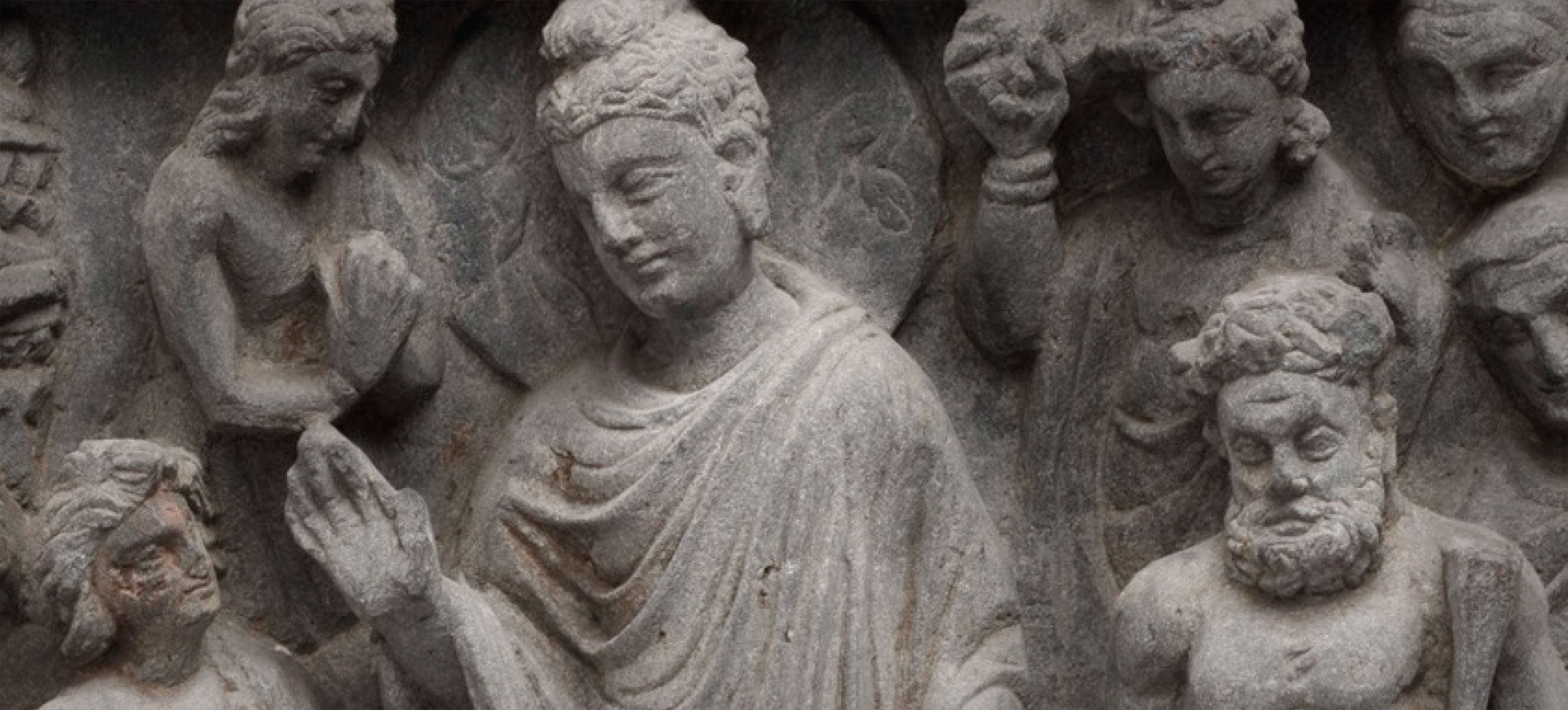
When the Himalayas Encounter the Alps: Buddhism-Mediated Exchanges between the East and West
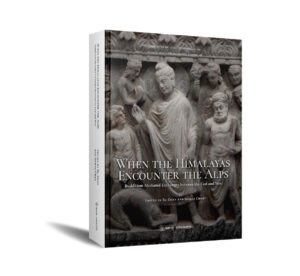
Edited by Ru ZHAN 湛如 and Jinhua CHEN 陳金華
Series: Hualin Series on Buddhist Studies XIII
Hardcover ISBN: 978-981-17675-8-6
Publishing Date: September 2025
Publisher: World Scholastic Publishers
Pages: 435
The initial spark of interest and academic inquiry into Buddhism within Europe can be traced back to the endeavors of Christian missionaries across South, East, and Central Asia. The foundation of Buddhist Studies was thus laid through comparative textual studies in various classical languages, facilitating the emergence of specialized fields such as Abhidharma Studies and enabling the examination of Buddhism from historical, sociological, and anthropological perspectives. In recent decades, the rapid development of Chinese Buddhist databases have broadened academic interest in Chinese Buddhism. This expansion enriches the traditional research focus that has largely centered on Theravada, Tibetan, and Japanese Buddhism, thereby integrating Chinese Buddhism more fully into the broader spectrum of global Buddhist scholarship.
While the propagation of Buddhism to the West marks a relatively recent chapter in its history, the foundations of Buddhism are deeply entwined with ancient Indo-European civilization. This connection suggests not only a shared lineage with Indo-European religious traditions but also a linguistic heritage rooted in ancient Indo-European languages. Moreover, Buddhism has significantly absorbed and reflected the cultural and institutional legacies of Indo-European civilizations. On the opposite end of the Eurasian continent, the form of Chinese Buddhism as it is recognized today emerged only after a millennium of adaptation. Consequently, the history of Buddhism’s reception in Europe, extending over a century, combined with its deep-seated origins in Indo-European civilizations and the two-thousand-year evolution of Buddhism in China, establishes Buddhism as a crucial conduit for fostering dialogue and connections between Eastern and Western civilizations. In this context, Buddhism emerges as a potent catalyst for contemporary mutual understanding and cultural exchanges between Asia and Europe. This rich historical and cultural tapestry invites extensive scholarly inquiry and discussion, highlighting Buddhism’s integral role in the interweaving of global cultural heritage.
As we contemplate the current landscape and delve into historical narratives, we find that Buddhism might have played a greater role than bringing Asia and Europe into contact; but rather, Buddhism acted as a rare medium bridging European, Near-Eastern, and Asian cultures in view of the influence of ancient European religions like Nestorianism, Zoroastrianism, and Manichaeism within Eastern contexts, partly thanks to Buddhism. This dual perspective enables us to extract valuable lessons from the past to enlighten our present and guide our future directions. Such an approach invites the possibility of crafting a new narrative centered on mutual advantages, collective advancement, and harmonious growth between Asian and European civilizations. Therefore, the global scholarly community is encouraged to embrace a broader international viewpoint, re-examining and re-evaluating the historical trajectory, present conditions, and future prospects of Buddhist and religious interactions between Europe and Asia.
In order to provide an interdisciplinary, innovative, and more balanced perspective on Buddhism-mediated exchanges between East and West, three partner universities of the Glorisun Global Network for the Study of Buddhism—the University of Cambridge, Peking University, and the University of British Columbia—jointly organized the international conference, ‘When the Himalayas Encounter the Alps: The Past, Present and Future of Asia-Europe Buddhist and Other Religious Exchanges’ (黑海東頭望大秦——亞歐佛教、宗教交流與合作:歷史、現狀與未來) from August 30 to September 2, 2024.
1. Buddhist Thought in European Intellectual and Colonial Contexts
-
- 1.1. Tao and Zen in Early Twentieth-Century Britain: An Inauthentic Religion?
T. H. BARRETT - 1.2. The Complexities of Orientalism: William Knighton and His Representation of Buddhism
Elizabeth J. HARRIS - 1.3. Eugène Burnouf and Buddhist Studies in France in the Middle of the Nineteenth Century
Kyong-Kon KIM
- 1.1. Tao and Zen in Early Twentieth-Century Britain: An Inauthentic Religion?
2. Academic Transmission and Institutionalization of Buddhist Studies
-
- 2.1. The Buddha’s Journey to the West: The Textual Traditions of Barlaam and Josaphat from a Linguistic Perspective
Chia-Wei LIN - 2.2. Johannes Nobel (1887–1960): A Study of His German Translation of The Biography of Kumārajīva (1927)
LI Xuetao 李雪濤 - 2.3. When the Lowlands Met the Snowlands: A Dutch Theosophist (?) on Himalayan Buddhism
Berthe JANSEN
- 2.1. The Buddha’s Journey to the West: The Textual Traditions of Barlaam and Josaphat from a Linguistic Perspective
3. Philosophical and Theological Dialogues Between Buddhism and the West
-
- 3.1. Dialogue of Buddhist and Christian Worldview in Nishida Kitarō’s Philosophy
Agnieszka KOZYRA - 3.2. Buddhism and Philosophy in Europe
Rafal K. STEPIEN - 3.3. From Dharma Talk to Religious Sentiment: Chinese Buddhist Encounters with the Religious Psychology of Friedrich Schleiermacher and Ludwig Feuerbach, 1912–1949
Richard ELLGUTH
- 3.1. Dialogue of Buddhist and Christian Worldview in Nishida Kitarō’s Philosophy
4. Identity, Modernity, and Buddhism Behind Cultural and Political Borders
-
- 4.1. Suluzhi 蘇魯支: A Chinese Zoroastrian Term and Its New Evidence
ZHANG Xiaogui 張小貴 - 4.2. Ferrying Buddhism: A Religious History of the Irrawaddy Flotilla Company, 1865–1942
Alexandra KALOYANIDES - 4.3 A Zen Circle Behind the Iron Curtain: Identity Formation of the First Polish Zen Buddhists
Przemysław SKRZYŃSKI
- 4.1. Suluzhi 蘇魯支: A Chinese Zoroastrian Term and Its New Evidence