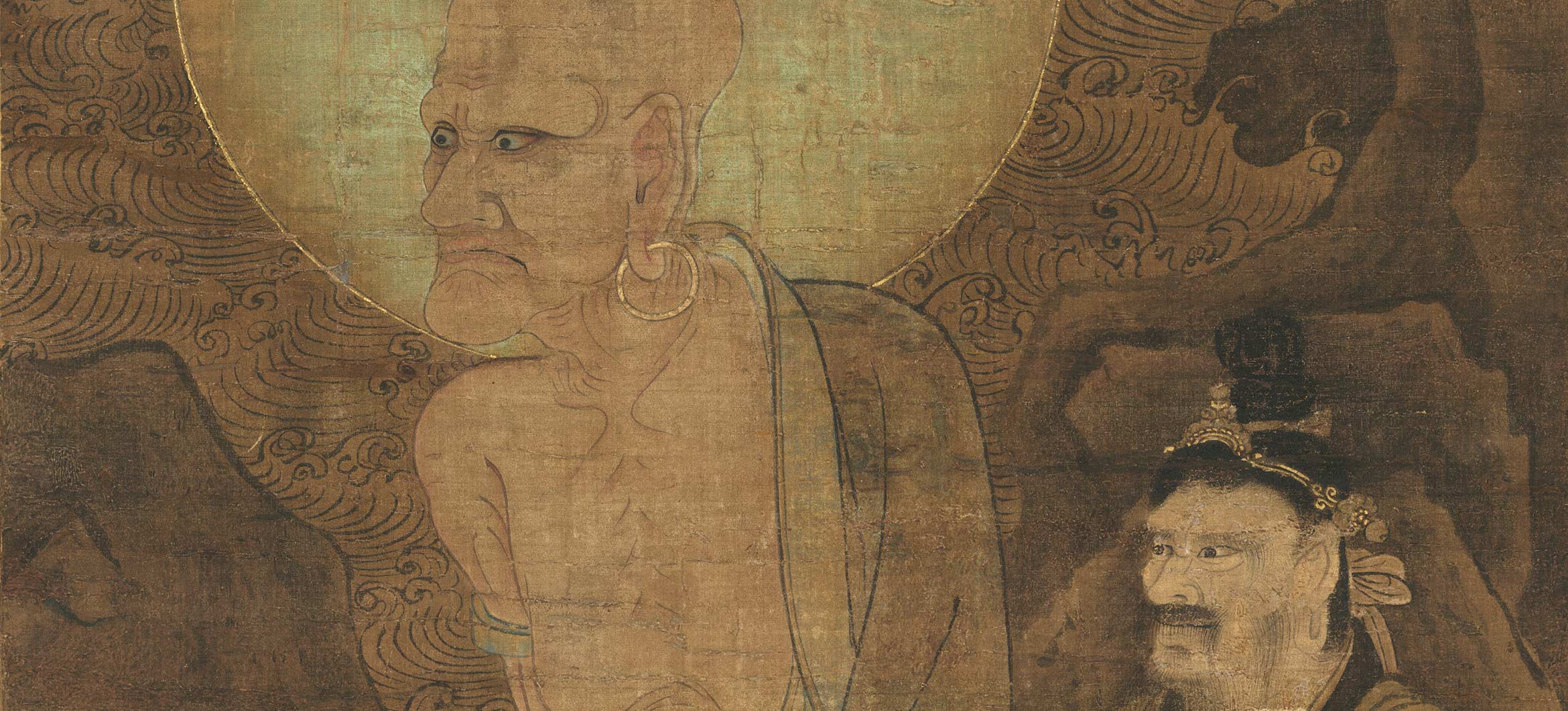
Buddhism and Medicine in Global and Interdisciplinary Perspective
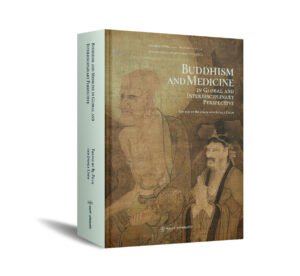
Edited by Ru ZHAN 湛如 and Jinhua CHEN 陳金華
Series: Hualin Series on Buddhist Studies XII
Hardcover ISBN: 978-981-17675-7-9
Publishing Date: September 2025
Publisher: World Scholastic Publishers
Pages: 581
The Buddha, who abdicated the world to contemplate the sufferings of birth, aging, illness, and death, earned the title of ‘Supreme Healer’ (Da yiwang 大醫王) for his commitment to mitigating worldly suffering. Buddhist teachings, likened to Agada medicine, target the eradication of the three poisons afflicting sentient beings. Buddhist monastics, likewise, are expected to master the ‘Science of Healing,’ a crucial segment of the five branches of Buddhist Sciences, utilizing this knowledge to provide relief and aid to those in critical need. Among the narratives in the Buddha’s biography, we find Jīvaka, the celebrated royal physician, renowned for his medical care to the Buddha, various kings, and the monastic community.
The vast heritage of Buddhist medical literature, available in a variety of languages such as Sanskrit, Pali, Tibetan, and Chinese, showcases a rich collection of texts focused on the Medicine Buddha and a wide range of medical subjects. Specifically, within the extant Chinese Buddhist medical literature, there exist at least 870 texts. These writings cover an extensive range of topics, from the core principles of Buddhist medicine and clinical methodologies to health maintenance practices throughout South Asia, Central Asia, and East Asia. Addressing aspects like etiology, symptomatic treatment, pharmacology, surgical techniques, rehabilitation, preventive healthcare, and end-of-life care, the Buddhist tradition has made substantial contributions to premodern medical knowledge.
Following Buddhism’s introduction to China, Chinese Buddhists notably employed medicine as a vehicle for disseminating its doctrines. This approach led to the emergence of numerous distinguished monastic physicians and the incorporation of medical literature within Buddhist monasteries. From the medieval era onwards, the founding of medical facilities, like the ‘Compassionate Care Clinics’ 悲田養病坊 within monastery grounds, significantly advanced public health in premodern China. The management of tropical diseases, for instance, was markedly improved by Buddhism’s migration from the tropical landscapes of India to China, safeguarding the lives of many people who relocated southward in the aftermath of the Yongjia Era (424–453) Upheaval. Moreover, Buddhist contributions have extended beyond merely treating illnesses ; the wealth of medical knowledge, detailed clinical case studies, and pivotal breakthroughs documented in biographical and historical texts, along with other Buddhist writings, have profoundly influenced the trajectory of Asian medical progress.
Buddhism has significantly influenced the spread of medical knowledge in Asia, especially in East Asia. In the glocalization process—a dialectical interplay of global integration and local adaptation—medicine, encompassing knowledge, literature, and practitioners, has emerged as a distinctive conduit. Through globalization, Buddhism has melded with the local cultures it encounters, achieving localization. Conversely, Buddhism that has been localized adopts innovative methods to expand into new territories, thus allowing locally adapted Buddhism to spread and evolve globally in a dynamic and layered fashion. The primary agenda of this conference is to delve into the complex and layered relationship between Buddhism and medicine across history, utilizing an interdisciplinary and multimedia approach to shed light on their global interactions.
The interplay between Buddhism and medicine transcends mere academic study of historical practices. In the present day, this dynamic interaction persists as Buddhism engages with the constantly evolving cutting-edge technological advancements in our era characterized by a heightened degree of globalization and glocalization. Contemporary Buddhist monastics and organizations are increasingly integrating medical philanthropy as an expression of the Buddha’s compassion, actively participating in international relief efforts and epidemic prevention. This approach marks a significant evolution in the Buddhist approach to healthcare. Consequently, it is imperative for the international scholarly community to broaden their perspective, reassessing the relationship between Buddhism and medicine both historically and in the contemporary context, to fully appreciate its evolving impact and significance.
To address the rich layers of medical knowledge embedded in the Buddhist literature and the complex history of Buddhism’s cross-border and cross-cultural impacts through the medium of medical science, the partner universities of the Glorisun Global Network for the Studies of Buddhism—the University of Cambridge and the University of British Columbia (UBC)—jointly organised the international conference, ‘“The Healer-King Curing the Three Poisons, while the Master Navigator Overcomes the Nine Misfortunes”: An International Conference on Buddhism and Medicine from an Interdisciplinary and Global Historical Perspective’ (醫王療三毒、航師度九厄:全球史與交叉學科視閾下的佛教與醫療國際研討會) from August 30 to September 2, 2024.
1. Buddhist Healing in Institutional and State Contexts
-
- 1.1. Beyond ‘Buddhism’ and ‘Medicine’: State Policies and Medical Pluralism in Contemporary Rakhine (Myanmar)
Céline CODEREY - 1.2. The Bodhisattva Physician in Tibet: Instituting Professional Medical Ethics at Sakya Monastery
William A. MCGRATH - 1.3. The Ritualization of Charity: State Welfare and Buddhist Healing in Ancient Japan
Alexander SOGO - 1.4. When Threatened Masculinity Trumps Pastoral Care in the Theravāda Vinaya: Calling the Buddha ‘Queer’ in Pali
Andrew SKILTON
- 1.1. Beyond ‘Buddhism’ and ‘Medicine’: State Policies and Medical Pluralism in Contemporary Rakhine (Myanmar)
2. Transmission and Cross-Cultural Translation of Buddhist Medicine
-
- 2.1. Translating Medicine Across Cultures: The Divergent Strategies of An Shigao and Dharmarakṣa in Introducing Indian Medical Concepts to China
Lu LU 盧鷺 - 2.2. Healing the Body and Mind: Buddhist Scriptures and the Medicine Buddha Mural at Dunhuang Cave 220
Irene LOK 駱慧瑛 - 2.3. The Dawn of the Physician: A Buddhist Approach to the History of Medicine
Federico DIVINO
- 2.1. Translating Medicine Across Cultures: The Divergent Strategies of An Shigao and Dharmarakṣa in Introducing Indian Medical Concepts to China
3. Ritual and Healing Practices in Buddhist Traditions
-
- 3.1.Cleaning and Healing: An Examination of the Ritual of Willow Twigs and Clean Water
LI Wei 李巍 - 3.2. Precepts, the Nenbutsu and Moxibustion: The Toolkit of a Buddhist Healer in Medieval Japan
Alessandro POLETTO - 3.3. Healing Through Letting Go: On the Maturation of a Certain Conception of Medicine in Indian Buddhism
Eviatar SHULMAN
- 3.1.Cleaning and Healing: An Examination of the Ritual of Willow Twigs and Clean Water
4. Ethics, Mind-Body Practices, and Altered States
-
- 4.1.Preparatory Guidelines for Meditation in Pre-Modern Sino-Tibetan Buddhist Traditions
Ching-Hsuan MEI 梅靜軒 - 4.2. On the Borderlands of Religion and Science: Indo-Tibetan Buddhist Contemplative Traditions and Psychedelic Medicine
Stuart Ray SARBACKER - 4.3 Hakuin Zenji’s Health Techniques and the Interaction Between Buddhism and Daoism
LIU Qing 劉青
- 4.1.Preparatory Guidelines for Meditation in Pre-Modern Sino-Tibetan Buddhist Traditions